
What Is Shisha Molasses and Why Is It Moist?
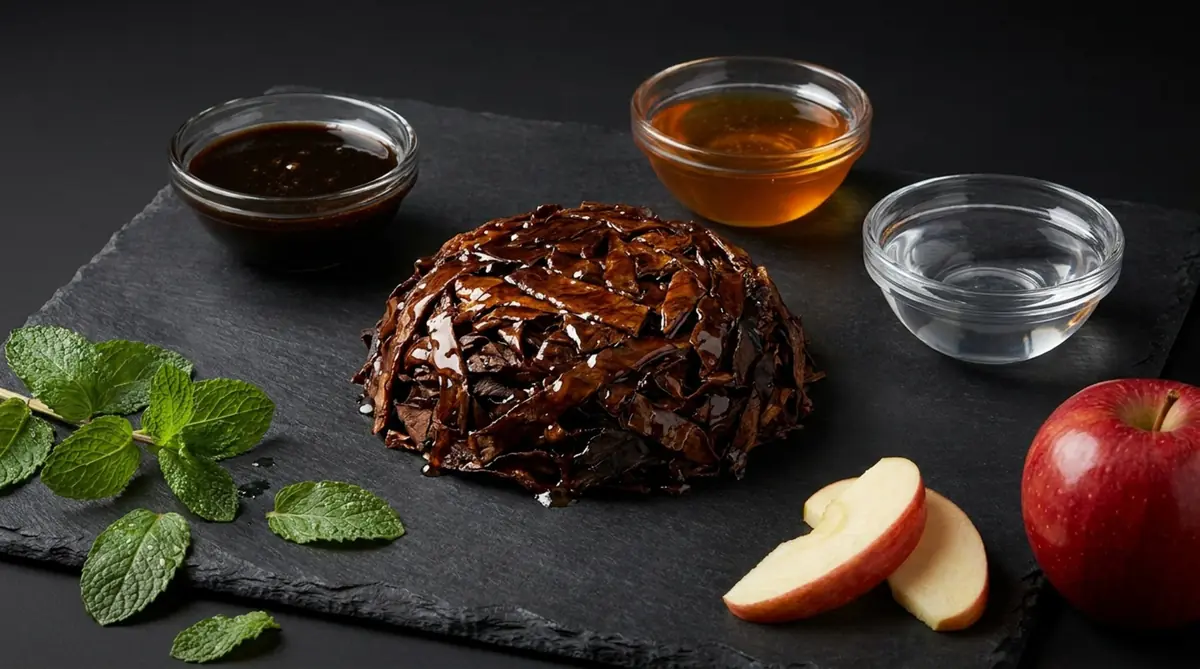
What is shisha molasses, and why is it so moist? Shisha molasses is a specially crafted blend of tobacco leaves, vegetable glycerin, natural sweeteners, and flavor extracts designed to vaporize under indirect heat rather than burn.
The rich moisture comes primarily from humectants like glycerin and sugar syrups that preserve the leaf, protect it from direct charcoal heat, and create the thick clouds and rich flavor essential to a great session.
What Is Shisha Molasses?
In traditional hookah culture across the Middle East, shisha molasses is often called ma’assel, an Arabic word that translates to “honeyed.” It marks a major evolution in how people enjoy waterpipes. In the past, enthusiasts smoked raw, unflavored leaves like tumbak or ajami, which had to be soaked in plain water before packing. The invention of ma’assel changed everything by blending the leaf with sweet syrups. This transformed strong, bitter tobacco into a fragrant, smooth smoking experience that can easily last from 45 minutes to two hours.
Modern shisha molasses acts as a flavor-carrying base for an aromatic liquid mixture. In high-quality blends, cured tobacco leaves make up roughly 20% of the total weight. The remaining 80% consists of humectants, natural sugars, and concentrated flavorings. This precise balance gives shisha its soft, jam-like texture and lets it handle charcoal heat without catching fire.
Discover shisha flavours and tobacco-free alternatives →What Ingredients Are Found in Shisha Molasses?
Authentic shisha molasses relies on four core ingredients: tobacco leaves, natural sweeteners (such as black treacle molasses, honey, or invert sugar syrup), food-grade vegetable glycerin, and concentrated flavor extracts. The tobacco leaf provides the foundation, body, and nicotine level.
Nicotine can range from around 0.05% in mild blonde leaf varieties to 0.5% or more in robust, unwashed dark leaf blends. Premium hookah products focus on clean craftsmanship, using carefully cut leaves free of large stems and debris.
The liquid components make up most of the recipe and define your session. Food-grade vegetable glycerin acts as the main humectant, turning heat into the dense, white clouds that hookah lovers appreciate. Sugarcane molasses or honey adds sweetness, body, and stickiness, which keeps the liquid locked onto the leaf fibers. Concentrated flavorings are blended in next, ranging from timeless double apple and fresh mint to modern citrus mixes, dessert vanilla, and warm spices.
How Is Shisha Molasses Different from Shisha Tobacco?
While people often use “shisha molasses” and “shisha tobacco” interchangeably, they can refer to different products. “Shisha tobacco” broadly describes any tobacco leaf grown for waterpipes, including raw, dry styles that require soaking. In contrast, “shisha molasses” specifically describes the finished, wet mixture where the leaf holds a rich blend of humectants and flavorings.
Shisha molasses is also completely different from the dry tobacco used in cigars or rolling papers. Standard dry tobacco is formulated to sustain open combustion once lit. Shisha molasses is made to do the exact opposite. If an open flame touches it, the sugars char rapidly. Instead, it relies on indirect heat from natural charcoal placed on foil or inside a heat management device (HMD), gently releasing flavor and vapor without burning.
How Is Shisha Molasses Made?
Producing modern shisha molasses is an art that balances leaf preparation, moisture control, and deep flavor infusion. You cannot simply pour sweet syrup over raw leaves and pack it into a jar. That would lead to separated liquids, uneven heat transfer, and a harsh draw. Master blenders treat the tobacco in distinct stages so the plant fibers can absorb and hold every drop of flavor.
Careful quality control runs through the entire process. Blenders watch the cut, resting temperatures, and moisture levels to keep every batch consistent. Turning raw leaf into an aromatic, balanced mix requires patience, proper resting periods, and a precise order of ingredients.
How Are Leaves Prepared and Flavored?
The journey starts with select leaves from the Nicotiana family, most commonly Virginia or Burley tobacco. Modern production facilities inspect and strip the leaves of thick stems. For lighter blonde blends, leaves are washed in warm water to rinse out natural bitterness and reduce nicotine content. Dark leaves, on the other hand, receive minimal washing or none at all, preserving their bold, earthy profile and higher nicotine strength.
Once washed, the tobacco is cut into clean, uniform ribbons or flakes and dried to a specific moisture level. Flavor extracts are introduced at this point. These extracts must soak deep into the cell structure of the plant rather than simply coating the surface. The blend is mixed thoroughly and allowed to rest so the aromatic oils infuse evenly throughout the leaves.
How Are Sweeteners and Humectants Added?
Next, the sweet syrup mixture is introduced. Molasses, honey, or invert sugar syrup is often gently warmed so it thins out, allowing it to coat every tobacco ribbon evenly. This sweet layer softens any natural sharpness in the leaf and releases subtle caramelized notes during a session.
Finally, vegetable glycerin is blended in. In premium production, the mixture is sealed and aged for at least 24 to 48 hours, often with gentle mixing over several days. This resting period allows the glycerin and syrups to marry with the leaf fibers. Proper aging prevents the liquids from separating or pooling at the bottom of the packaging later on.
Why Is Shisha Molasses Moist?
The moisture in shisha molasses is completely intentional. If you tried smoking dry tobacco in a hookah bowl, the intense heat of the charcoal would scorch the leaves in seconds. That would ruin your session with a harsh, acrid taste. Moisture buffers the heat, keeping the packing temperature near 150°C and allowing the blend to bake gently rather than burn.
It helps to know that “moist” does not mean full of water. Lab tests show that water makes up only about 10% to 19% of the total weight in commercial waterpipe tobacco. Most of the wetness comes from heat-stable humectants and syrups that do not easily evaporate during storage.
How Do Molasses, Honey, and Vegetable Glycerin Add Moisture?
Vegetable glycerin provides most of the moisture you feel. Glycerin is a clear, odorless, syrupy liquid that is naturally hygroscopic, meaning it draws and holds water molecules from the air. Through hydrogen bonding, it locks moisture directly into the tobacco leaf, keeping it soft, shiny, and ready for heat.
Natural molasses and honey add rich density. While they don’t draw moisture from the air as strongly as pure glycerin, their natural sugars-fructose, glucose, and sucrose-create a thick barrier. This syrup layer seals the leaf, slows down flavor loss, and keeps your shisha fresh and workable for months on the shelf.
Why Does Moisture Improve Smoke Production?
The thick clouds you see during a hookah session are not smoke from burning leaves. They are actually a dense aerosol vapor. Because vegetable glycerin has a high boiling point, hot air drawn through the bowl turns the liquid into millions of microscopic vapor droplets suspended in the air. This vapor looks like smoke, but it carries a cool, smooth draw that feels clean on the throat.
Moisture is essential for this reaction. Plain water would flash into steam and vanish immediately, leaving the leaf unprotected. Glycerin, however, stays in the airflow alongside water vapor and aromatic flavor compounds, giving you the massive, dense clouds associated with modern hookah culture.
What Happens If Shisha Molasses Is Too Wet or Too Dry?
Balance is key to creating a perfect session. If a blend is oversaturated with loose syrup, the excess liquid can pool at the bottom of the bowl and boil under the coals. This restricts airflow, causes bubbling, weakens your flavor profile, and leads to thin, watery vapor. In traditional Egyptian bowls with holes in the bottom, loose juices can also leak down the stem into the base water, muddying the taste.
Tobacco that is too dry creates the opposite issue. Without enough humectant protection, the leaves overheat rapidly. The session becomes harsh, dry, and bitter within minutes. High-quality shisha molasses should feel sticky, supple, and evenly coated without swimming in loose pools of liquid.
Keep your hookah clean with a molasses catcher →How Does Shisha Molasses Affect Flavor, Smoke, and Session Length?
The liquid balance inside your shisha molasses dictates your entire smoking experience. From the first pull to the end of the charcoal, heat interacts with the syrup coating and the leaf beneath. Because water, flavor essences, and glycerin vaporize at slightly different temperatures, the recipe controls how flavor evolves over time.
When you start your session, lighter aromatic compounds and tiny amounts of water vaporize first, delivering bright, crisp opening notes. As the bowl warms thoroughly, the glycerin and sweet molasses begin releasing dense aerosol, sustaining thick clouds and revealing rich, deeper flavor notes throughout the rest of your session.
How Does Moisture Improve Flavor Distribution?
Shisha flavor concentrates combine natural oils, fruit extracts, and spice essences. These concentrated compounds need a stable carrier to disperse evenly across the plant fibers. Vegetable glycerin serves as the perfect medium. It holds the flavorings in a uniform solution, coating the leaf completely so the taste doesn’t flash off all at once.
This controlled vaporization keeps your flavor consistent from start to finish. In an overly dry blend, delicate flavor notes scorch almost immediately, leaving you with a flat, roasted taste. A well-moistened blend ensures every smooth draw delivers an equal balance of flavor and vapor.
How Do Heat Management and Packing Affect Moisture?
How you pack your bowl and manage your heat directly impacts how that moisture performs. Many enthusiasts prefer a phunnel bowl-a modern bowl with a single raised central spire instead of holes at the bottom. This design keeps the rich molasses and juices trapped inside the bowl where they can vaporize slowly, rather than draining into the stem.
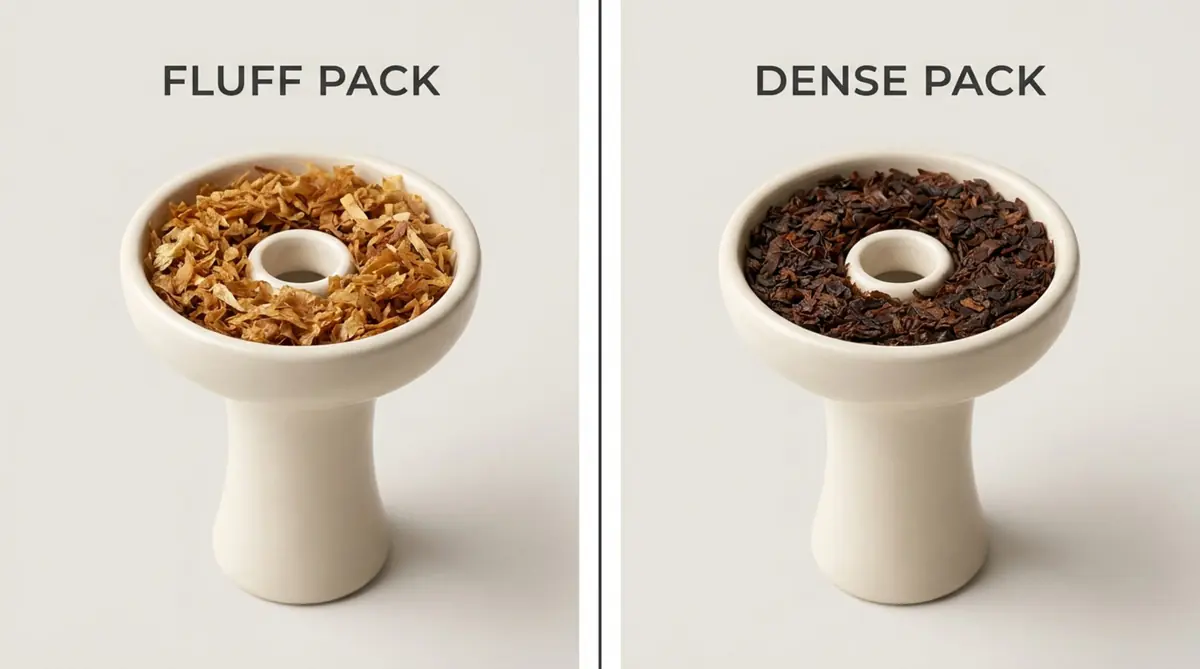
Your packing density also changes how heat travels through the moist leaves:
- Fluff Pack: Leaves are dropped loosely into the bowl up to the rim. Generous air pockets allow heat to flow around every ribbon, warming the moisture gently from all sides without scorching one spot.
- Dense Pack: Leaves are pressed down firmly. This technique suits robust dark leaf varieties. The tight density slows down moisture evaporation and requires slightly more heat to warm the bowl evenly.
Careless heat management can quickly ruin your moisture barrier. Placing too many quick-light coals or unmanaged cubes directly over your setup can boil the glycerin too rapidly, leaving the leaves underneath dry and burnt.
What Is the Difference Between Shisha Molasses and Herbal Shisha?
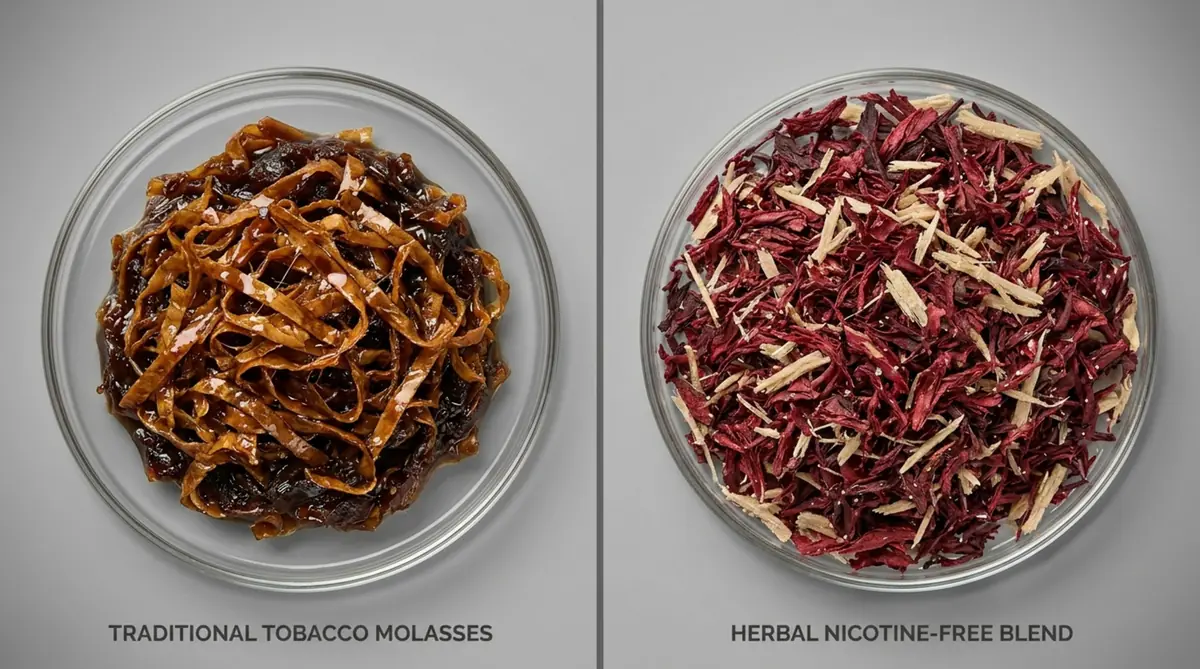
Herbal shisha has become popular for those seeking a tobacco-free, nicotine-free alternative. While traditional shisha molasses uses leaves from the Nicotiana plant, herbal blends swap the tobacco for alternative bases like dried tea leaves, sugar cane fiber (bagasse), cellulose, or dried fruit pieces.
Even though the base material changes, herbal shisha relies on the exact same principles as traditional ma’assel. These plant fibers must be thoroughly infused with vegetable glycerin, natural syrups, and flavorings to prevent direct burning and generate satisfying vapor clouds.
How Do Tobacco and Herbal Shisha Compare in Texture and Moisture?
Both styles look wet, glossy, and sticky in the container, but they absorb liquid differently. Cured tobacco leaves have cellular pores that naturally soak up and hold humectants deep inside the leaf, creating a soft, pliable texture that packs easily into any bowl.
Herbal materials like tea leaves or sugar cane fibers don’t always absorb liquids as deeply. Some hold the syrups mostly on their outer surface, which can leave them feeling stickier or cause juices to settle quickly. For this reason, herbal blends usually perform best with a light fluff pack, giving hot air plenty of room to pass over the coated fibers without scorching the delicate plant matter.
Can Herbal Shisha Produce the Same Dense Smoke?
Yes, absolutely. Herbal blends can generate clouds that are just as thick, white, and voluminous as traditional tobacco. That is because visible hookah clouds come from vaporized vegetable glycerin and water, not from tobacco combustion. When an herbal blend contains 30% to 40% glycerin by weight, its cloud production matches standard molasses.
The real difference lies in throat feel and heat sensitivity. Herbal blends have zero nicotine, so they don’t produce the traditional throat hit or relaxing buzz of cured leaf. Furthermore, many herbal materials are more sensitive to high temperatures, meaning they require gentle, attentive heat management to avoid singed plant notes.
How Should You Store Shisha Molasses?
Because shisha molasses naturally interacts with surrounding air, proper storage is crucial for maintaining freshness, flavor intensity, and cloud performance. Leaving a container open in dry air causes the humectants to dry out, while high humidity can cause the blend to absorb excess water. Both scenarios upset the balance of your shisha.
Poor storage also leads to flavor loss, where bright top notes escape into the air, leaving the remaining tobacco flat. A few simple storage habits will protect your collection and keep every session tasting vibrant.
What Temperature and Container Keep Shisha Molasses Fresh?
Store your shisha molasses in an airtight, non-porous container. Food-grade plastic tubs with airtight silicone seals or wide-mouth glass jars work best. They create a secure barrier that prevents outside air from entering and stops essential flavor oils from evaporating. Storing the original foil pouch inside an airtight tub adds an extra layer of defense.
Keep your containers in a dark, dry cabinet at room temperature, ideally between 18°C and 23°C. Avoid storing shisha in the refrigerator. Constant temperature shifts when moving the container in and out of the cold cause condensation to form inside, which waters down the molasses and dulls the flavor profile.
How Can You Prevent Drying, Separation, and Contamination?
Over time, heavy syrups and glycerin naturally sink to the bottom of the tub due to gravity, which can leave the top layer dry. If you store shisha in pouches, knead or flip them occasionally to redistribute the liquids. If you use tubs, stir the contents from the bottom up using clean hookah tongs or a packing fork before building your bowl.
Always practice clean handling. Never reach into your shisha with wet or bare hands. Water droplets, natural skin oils, and stray food particles can spoil the blend or invite mold. Dedicated, clean shisha tools keep your stash pristine.
How Can You Tell If Shisha Molasses Has Gone Bad?
Thanks to high concentrations of sugar and vegetable glycerin, shisha molasses has a very long shelf life because microbes struggle to survive in it. When kept sealed in a cool, dark place, an unopened pack can easily last two years or more. Once opened, it typically stays fresh for six to twelve months. Poor storage conditions, however, can shorten that lifespan.
Here are the telltale signs that a batch has lost its quality:
- Unpleasant Odor: A sour, musty, or chemical smell that overpowers the original fruit or spice aroma.
- Visible Mold: Fuzzy white, gray, or greenish spots on the tobacco. These look distinct from clear sugar crystals, which dissolve easily when rubbed between warm fingers.
- Severe Desiccation: Leaves that have become brittle, stiff, and crumbly, completely missing their syrupy gloss and stickiness.
The Bottom Line
Shisha molasses is all about balance-harmonizing quality tobacco, rich humectants, and proper heat. When you understand how these elements work together, packing a great bowl becomes second nature.
If you’re ready to elevate your setup, explore our collection of premium hookah products and accessories at Shisha Boutique, and discover the craftsmanship behind every memorable session.
See also.

Hookah what is it actually?
The hookah, also known as a water pipe, is a smoking device that has gained immense popularity around the world. Originating in regions of the Middle East, the hookah has become an integral part of many cultures, especially in Arab countries. Nowadays, it is increasingly common to find it in various places, such as bars, […]
go to article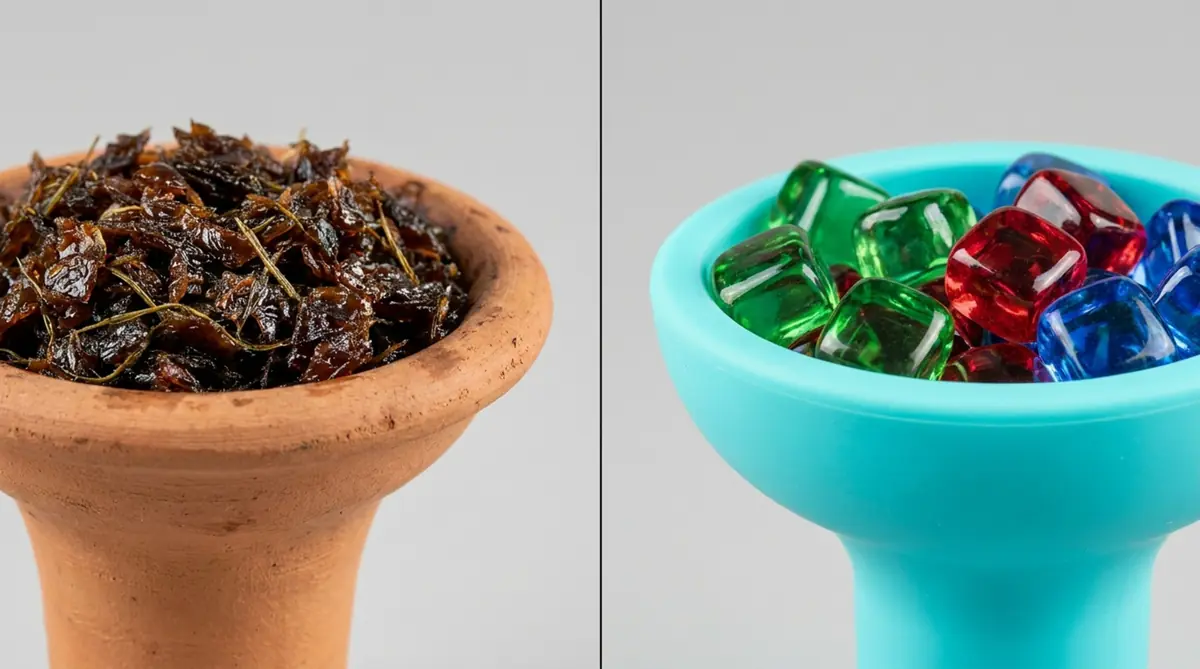
What Are Steam Stones and How Do They Work?
How do steam stones create a flavorful hookah session without tobacco? Steam stones are porous minerals soaked in flavored glycerin that vaporize when heated, delivering rich flavor and thick clouds for a completely tobacco-free experience. What Are Steam Stones? Steam stones are a modern twist on traditional hookah culture. Instead of heating flavored tobacco leaves, […]
go to article
What to replace the hookah coals with?
Preparing the perfect hookah requires a suitable heat source. Many Hookah enthusiasts wonder what to replace shisha coals with. In the following article, we’ll take a look at the various options available to replace traditional coals, analyzing their advantages, disadvantages and impact on the smoking experience. Hookah coals – why are they so popular? Before […]
go to article