
Charcoal Readiness Checklist Before Placing Coals on the Bowl
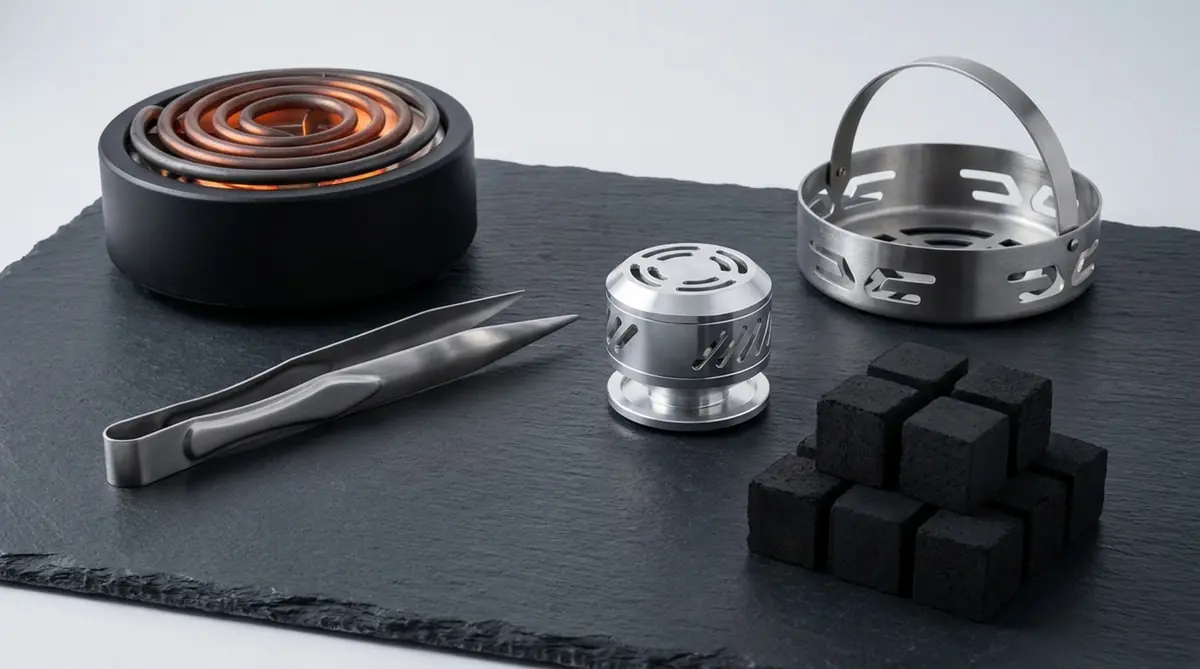
How do you know when charcoal is ready to place on your hookah bowl? Coals are fully ready when they glow red-orange throughout and are completely covered in a fine layer of grey ash with no black patches left.
Using properly heated coals provides steady temperature control, rich flavor, and a smooth smoking experience from the very first pull.
Why Follow a Charcoal Readiness Checklist Before Placing Coals on the Bowl?
Hookah culture is built around relaxation and shared rituals, but small preparation details make all the difference. How your coals look and burn before touching the bowl is one of the most overlooked steps. Setting up your heat properly creates the foundation for a great hookah session.
What Problems Can Arise from Skipping Preparation Steps?
Skipping proper coal prep can quickly spoil your session, even if you’ve packed the bowl correctly. The most common issue is a harsh, acrid taste. Coals that aren’t fully ignited release unpleasant gases and odors that mask the rich flavors of your shisha molasses.
Incomplete prep can also scorch your shisha tobacco. Coals with cold spots or uneven heat generate sudden hot zones that cook the molasses too fast, turning the flavor bitter. In addition, under-lit coals tend to black out early, resulting in weak heat and thin clouds rather than thick clouds and a smooth draw.
How Does Proper Preparation Improve Smoking Results?
Following a checklist gives you consistent, dependable heat throughout your session. Fully lit coals provide clean thermal transfer, letting the authentic flavor profile of your shisha tobacco shine without chemical off-notes.
Proper heat distribution also supports dense, thick clouds and an even bowl cook. Because well-lit coals burn steadily for longer, you won’t need to constantly adjust or replace them, leading to a smoother draw and a more relaxing hookah session.
Shop clean-burning coconut charcoal →What Equipment and Supplies Are Needed for Charcoal Readiness?
Using the right hookah accessories makes heat management straightforward and reliable. You only need a few dependable tools to handle your coals properly.
What Types of Charcoal Are Suitable?
For the best results, natural coconut shell charcoal is the standard in modern hookah culture. Made without chemical lighting agents, coconut coals take about 10 to 15 minutes to ignite on an electric burner, but they burn cleanly for 60 to 90 minutes. They deliver steady, neutral heat that preserves your shisha’s flavor profile.
Quick-light coals ignite rapidly due to added accelerants, but they can impart a chemical taste to your session. If you ever use quick-lights, wait until they are completely covered in ash before placing them on the bowl.
For the cleanest taste and best session quality, natural coconut coals remain the top recommendation.
Tools and Accessories Checklist
Keep these essential tools nearby before lighting up:
- Charcoal burner: A dedicated electric coil burner or gas burner designed for natural coals.
- Hookah tongs: Long, sturdy metal tongs to move hot coals safely.
- Heat Management Device (HMD) or foil: An HMD or heavy-duty foil paired with a foil poker to manage airflow and heat transfer.
- Charcoal tray or carrier: A heat-safe metal tray to hold ash and transport glowing coals.
- Wind cover: Useful for outdoor sessions to shield coals from drafts.
Recommended Safety Gear
Handling glowing charcoal requires basic safety precautions:
- Heat-resistant tongs or gloves: Protects your hands when adjusting hot HMD components or moving coals.
- Water source or fire extinguisher: Keep accessible nearby in case of dropped coals.
- Carbon monoxide (CO) detector: Essential whenever heating or using charcoal indoors.
Charcoal produces carbon monoxide regardless of whether it looks red, grey, or black. Charcoal should always be burned in well-ventilated spaces. If smoking indoors, keep windows open and ensure steady airflow throughout the entire lighting process and session.
Step-by-Step Charcoal Readiness Checklist Before Placing Coals on the Bowl
Taking coals from cold cubes to ready heat sources requires a structured approach. Follow these steps to prepare your coals correctly every time.
1. Inspect and Clean the Shisha Bowl and Setup
Before you light your coals, make sure your hookah is clean. Old molasses and residue from previous sessions will muddy fresh flavors. Rinse the bowl, stem, base, and hose.
Pack your shisha tobacco evenly into the bowl with a light touch to encourage good airflow. If you’re using aluminum foil, pull it taut across the rim and punch neat, evenly spaced holes. If using a heat management device, ensure it sits flat and clean atop the bowl.
2. Select and Measure the Right Amount of Charcoal
The number of coals you need depends on your bowl size, tobacco brand, and heat preference. A standard setup usually calls for two to four coconut coal cubes.
Starting with two or three coals is ideal for most setups. You can always add another coal later if you need more heat, but it’s hard to salvage tobacco once it has scorched.
3. Check Charcoal for Quality and Dryness
Inspect your coals before placing them on the burner. High-quality coconut charcoal should feel hard, solid, and completely dry. Coals that feel damp, soft, or crumbly have absorbed humidity from the air, making them harder to ignite and prone to blacking out.
Discard compromised coals and store your fresh charcoal in an airtight container in a dry location off the floor.
4. Arrange Firelighters or Chimney Starter
For natural coconut charcoal, place your cubes flat on the coils of a dedicated electric burner. Ensure they make direct contact with the heating element. To speed up the process, cover the coals with a shield made of aluminum foil or a heating chimney. This traps the heat, so the coals light faster and more evenly, without the need to flip them.
If using natural lump charcoal for outdoor setups, a chimney starter paired with natural firelighters works well. Place the charcoal in the chimney and light the starter underneath on a heat-safe surface so the vertical draft draws heat upward through the coals.
5. Light Charcoal Safely and Evenly
Turn on your electric burner and let the coals heat up. They will start glowing bright orange on the side facing the element.
Never apply lighter fluid or chemical accelerants to natural hookah coals. These chemicals ruin the flavor profile and create safety hazards. Always light your charcoal in a well-ventilated space to let early smoke disperse.
6. Wait for Charcoal to Reach the Right Shisha Heat
A coal glowing on just one side isn’t ready for your bowl. Coals need to reach full ignition to provide clean, consistent heat without unwanted odors.
How to Identify When Charcoal Is Ready?
Use this reference table to check your charcoal’s readiness:
| Check | What you want to see | What it means |
| Color | Grey/white ash on all sides | Coal is fully lit and burning clean |
| Black spots | No black areas left | No unlit sections that can cause a harsh taste |
| Smoke | Little to no thick white smoke | Coals have finished burning off initial gases |
Flip the coals halfway through lighting so all sides heat evenly. Natural coconut coals typically take 10 to 15 minutes to become fully red and covered with ash. Cold ambient temperatures or drafts can extend this time, so don’t rush the process.
7. Distribute the Hot Coals According to Your Smoking Method
Once the coals are fully glowing and ashed over, use your tongs to transfer them to your foil or HMD.
Position the coals based on your heat goals:
- Balanced heat: Place coals evenly around the outer edge of the bowl.
- Lower heat: Use fewer coals or place them farther out toward the rim.
- Higher heat: Add a coal or shift them slightly inward toward the center.
Rotate the coals around the bowl periodically during your session to keep the tobacco heating evenly.
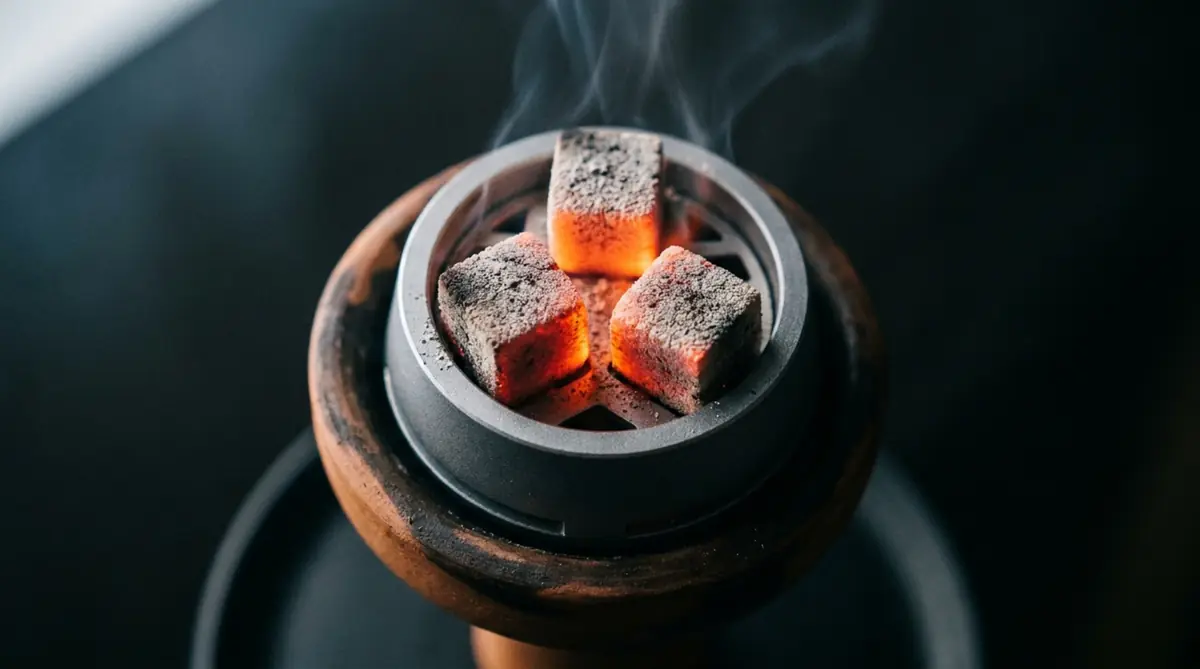
How to Confirm Charcoal Is Ready for Smoking?
Conduct a quick final check before placing coals onto your bowl to protect your tobacco and enjoy a smooth draw from the start.
Visual Cues: Color and Ash Coverage
The most dependable indicator is uniform ash coverage. The exterior should show a thin layer of white or grey ash with no dark, unlit patches remaining. In dimmer light, the entire coal should emit an even, glowing red-orange color.
Temperature Checks: Hand Test and Grill Thermometers
Grill thermometers aren’t practical for hookah coals. You can briefly hold your hand several inches above the coals to confirm intense, steady radiant heat. Ultimately, visual ash coverage and an absence of smoke remain the most reliable proof of readiness.
Why Even Heat Distribution Matters
Uneven heat causes cold spots that produce thin clouds and hot spots that burn your shisha molasses. Fully ignited, well-placed coals warm the bowl uniformly, producing rich flavor, thick clouds, and a consistent session without constant adjustments.
Heat coals evenly with an electric charcoal starter →Troubleshooting Common Charcoal Readiness Issues
If your coals aren’t lighting or heating properly, a few common factors are usually responsible.
What If Charcoal Won’t Stay Lit?
Dampness is the most frequent cause of coals going out. Moisture makes coals difficult to ignite and causes them to black out quickly. Replace damp charcoal with fresh, dry cubes.
Poor airflow during lighting can also starve coals of oxygen. Avoid packing cubes too close together on the burner coils. Finally, coal quality matters; premium hookah equipment and dense, high-grade coconut coals stay lit much more reliably.
How to Handle Wet or Damp Charcoal
Prevention is always best: keep your coals sealed in an airtight bin in a dry, temperature-controlled room. If coals have taken on significant moisture, it is best to replace them rather than risk poor performance and uneven burning during your hookah session.
Adjusting for Windy or Humid Conditions
Wind cools coals during the lighting phase and accelerates their burn rate once placed on the bowl. Shield your burner in a sheltered area, and use a wind cover on your hookah to protect the coals outdoors. In high humidity, coals take longer to ash over completely, so allow a few extra minutes on the burner.
Tips for Safe and Efficient Charcoal Handling
Practicing good charcoal habits protects your equipment and helps you get the most burn time out of every piece.
Safe Storage and Disposal of Charcoal
Store unused charcoal in an airtight container away from moisture and flammable items. After your session, allow coals to extinguish and cool down completely in a metal tray or charcoal carrier before disposing of them. Never place warm coals in a trash bin, and avoid pouring water over hot coals, as sudden steam can scatter hot ash.
Once completely cool, ash from natural coconut coals can be discarded safely in accordance with local regulations.
Preventing Flashbacks and Flare-ups
Harsh hits and flare-ups happen when under-lit coals with raw black patches are placed on the bowl. Always wait for full ash coverage. Handle hot coals with sturdy tongs, keep your hookah on a stable surface, and keep the surrounding area free of flammable materials.
Minimizing Waste and Maximizing Burn Time
To extend burn time and reduce waste:
- Choose dense, high-grade coconut charcoal for longer, cleaner burns.
- Ensure coals are fully lit on all sides before setting up your bowl.
- Use a heat management device to regulate airflow and maintain efficient heat transfer.
- Let unused remnants cool fully in an ash tray; solid leftover pieces can often be reheated alongside fresh coals for subsequent sessions.
See also.
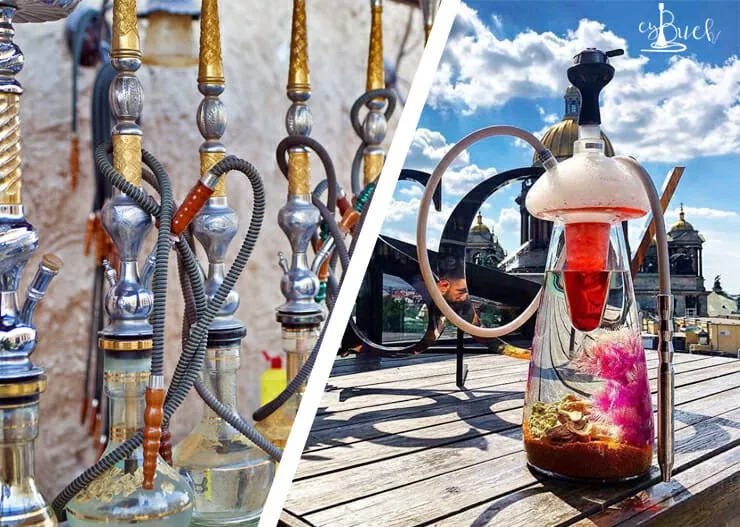
Hookah priced at 400zl vs 1400zl.
A lot of doubts always arise in connection with the purchase of a hookah, and they concern basically all aspects.The choice of models, designs and colors is overwhelming, it can even make your head spin, and that’s just the beginning!No less important is the proper flow of smoke, richness of flavor, ease of lighting or […]
go to article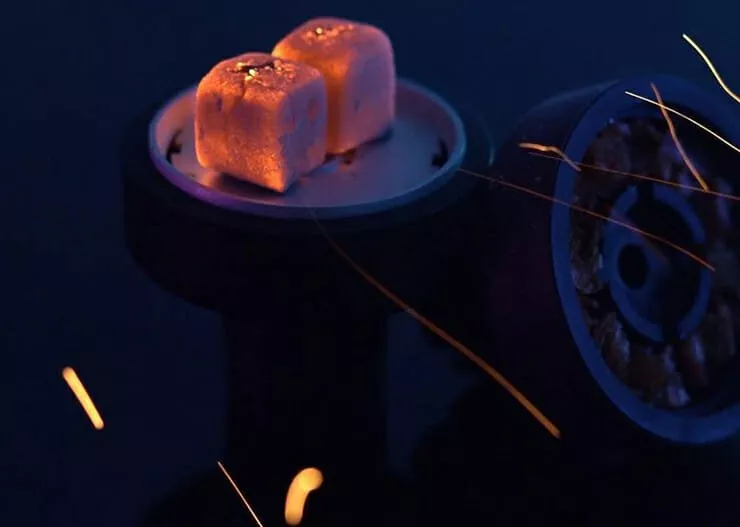
Hookah charcoals without secrets – a tutorial
Coal is the primary fuel of the water pipe. Apart from electric heaters, adapted for smoking inhalation solutions, hookah charcoals have virtually no alternatives. Unfortunately, the traditional method of roasting them is not without drawbacks. It is, of course, about the negative effects of smoke inhalation on the human body. As with all stimulants, it […]
go to article
Best Durable Hookahs for High-Traffic Lounges
Which hookahs are durable enough to handle the daily demands of a high-volume lounge? The most reliable commercial setups feature solid 304 stainless steel construction, wide stable bases, and modular designs built for quick cleaning and continuous daily use. Choosing the right commercial-grade equipment keeps your sessions running smoothly, protects your workflow, and delivers rich […]
go to article