
Beginner Hookah Setup Diagram: How Every Part Connects
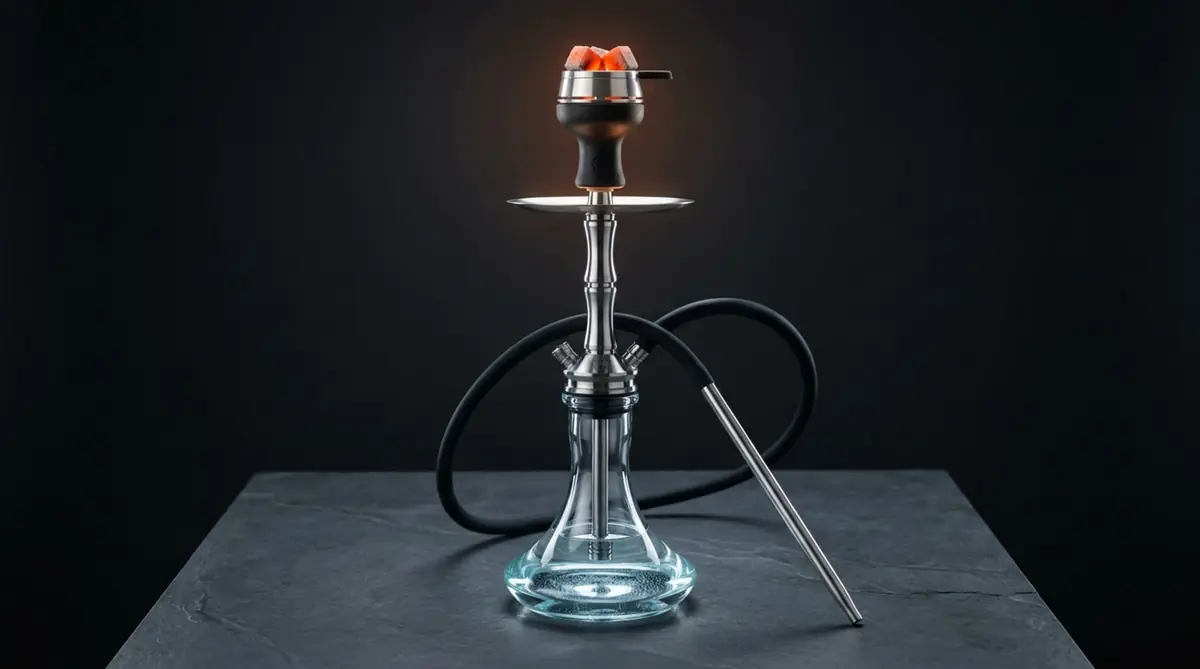
How do you connect each part of a hookah setup to get a smooth draw and rich flavor? A hookah operates as a sealed pressure system where the bowl, stem, water base, and hose work together to direct heat, cool the smoke, and create thick clouds.
Understanding how each piece connects turns a table full of parts into a ready-to-use setup for a great hookah session.
What Does a Hookah Diagram Show?
A hookah diagram does more than just name individual parts. It maps out how every component interacts along three primary paths:
- Heat path: Charcoal transfers heat through the bowl to vaporize the shisha molasses.
- Airflow path: Inhaling pulls air through the bowl, down the stem, through the water base, and out through the hose.
- Pressure-release path: The purge valve allows you to blow stale smoke out of the base chamber without water rising into the stem.
The diagram also highlights where rubber or silicone grommets sit. These seals block outside air from entering, keeping the airflow strictly on its intended route so your session performs as designed.
Why Is Understanding Each Connection Important?
Knowing how your hookah connects helps you assemble it correctly and troubleshoot performance issues quickly. Every seal, joint, and part position directly impacts draw resistance and flavor quality. A loose grommet or an incorrect water level can cause a weak, airy draw or harsh smoke.
Hookahs work by creating low pressure inside the glass base when you inhale through the hose. If outside air leaks through an unsealed joint, that pressure drops, reducing vapor output. When you know how the parts fit together, you can easily maintain an airtight seal and enjoy a smooth smoking experience every time.
Get everything in one box with a starter pack →Which Parts Make Up a Hookah Setup?
Before assembling your gear, it helps to understand the purpose of each component. While modern hookah design offers many styles, the core anatomy remains consistent across almost all setups.
Hookah Base and Water Chamber
The base-typically made of thick glass-holds the water and acts as the expansion chamber for smoke. When you draw from the hose, smoke travels down into the water, which cools the vapor and creates the familiar bubbling sound. The ideal water level covers the bottom of the downstem by about 1,5-2,5 cm.
While cool water lowers the temperature of the smoke for a smoother feel, it does not filter out all combustion byproducts or toxins. The base serves primarily as a cooling chamber and pressure reservoir.
Downstem and Its Role in Airflow
The downstem is the metal tube extending from the main stem directly into the water. It forces the smoke beneath the water line during inhalation. Many modern stems feature a built-in or removable diffuser at the bottom. A diffuser uses small perforations to break large air bubbles into tiny ones, resulting in a quieter rumble and a noticeably smoother draw.
Submersion depth is critical:
- Too shallow: Warm smoke and insufficient cooling.
- Too deep: A heavy, restricted draw because you must pull against too much water weight.
Smoke Column and Stem Assembly
The stem (or shaft) is the central spine of the hookah. It connects the bowl adapter at the top to the downstem at the bottom and houses the hose port and purge valve. Smoke travels down through this column before reaching the water base.
High-quality stems feature solid craftsmanship using materials like stainless steel or anodized aluminum to maintain an airtight passage and resist flavor ghosting.
Hose Port and Hose Connection
The hose port is the outlet on the stem where the hose connects. A silicone hose grommet creates an airtight seal between the port and the hose connector. The hose carries the cooled smoke from the base chamber to the mouthpiece. Using food-grade silicone hoses is standard practice today because they provide an open draw, are easy to wash, and do not hold onto lingering flavors from previous sessions.
Purge Valve: Clearing Stale Smoke
The purge valve is a one-way release mechanism located on the stem opposite the hose port. It houses a small ball bearing (made of plastic, glass, or stainless steel):
- When you inhale, the ball drops into place, sealing the valve so outside air cannot enter.
- When you blow gently into the hose, the air pressure lifts the ball, venting warm or stale smoke out of the base.
Regularly cleaning the purge port prevents the bearing from sticking due to moisture or residue buildup.
Bowl and Bowl Adapter
The bowl sits at the very top of the hookah and holds your shisha tobacco or herbal molasses. Bowls are commonly made from clay or ceramic because these materials absorb and distribute heat evenly. The shape of the bowl, whether a classic multi-hole bowl or a phunnel bowl, influences how molasses heats up and how long the session lasts.
The bowl adapter is the threaded or fixed fitting at the top of the stem. A bowl grommet sits over this adapter, ensuring the bowl fits snugly without air leaks or wobbling.
Charcoal Tray and Coals
The charcoal tray rests beneath the bowl adapter. It catches falling ash, holds your tongs when not in use, and provides a heat-resistant surface for managing hot coals during your session.
Charcoal serves as the heat source that bakes the shisha molasses. Natural coconut coals are preferred throughout hookah culture because they burn at a steady temperature, last longer, and produce clean heat without chemical odors. Controlling coal placement is the most effective way to regulate bowl temperature and protect flavor quality.
Heat Management Device (HMD) or Foil
To transfer heat from the coals to the shisha, you will use either aluminum foil or an HMD:
- Foil: Heavy-duty foil wrapped tightly over the bowl rim with small, evenly spaced holes poked across the surface.
- Heat Management Device (HMD): A specialized metal device placed directly onto the bowl to hold the coals, regulate airflow, and evenly distribute thermal energy.
Both methods aim to bake the molasses evenly without charring the top layer.
Grommets and Seals
Grommets are flexible silicone or rubber gaskets that ensure every joint on the hookah remains completely airtight. The standard grommets in any setup include:
- Bowl grommet: Seals the base of the bowl to the stem adapter.
- Base grommet: Seals the connection between the main stem and the glass base.
- Hose grommet: Seals the hose connector inside the hose port.
Because hookah relies on internal vacuum pressure, even a tiny tear in a grommet can weaken smoke production. Lightly dampening a grommet can help it slide smoothly into place without pinching.
How Do All Hookah Parts Connect?
A well-prepared hookah functions seamlessly when all parts create a continuous, sealed pathway from the top of the bowl down to the hose tip.
Sealing Joints: Preventing Air Leaks
Airtight connections are essential for dense clouds and rich flavors. The three critical sealing points are:
- The bowl is seated firmly on the bowl grommet.
- The stem is locked tightly into the neck of the base.
- The hose connector is seated all the way inside the hose port.
If any connection is loose, room air bypasses the bowl, resulting in thin vapor and reduced flavor intensity. Treating grommets as vital functional components ensures your setup performs consistently.
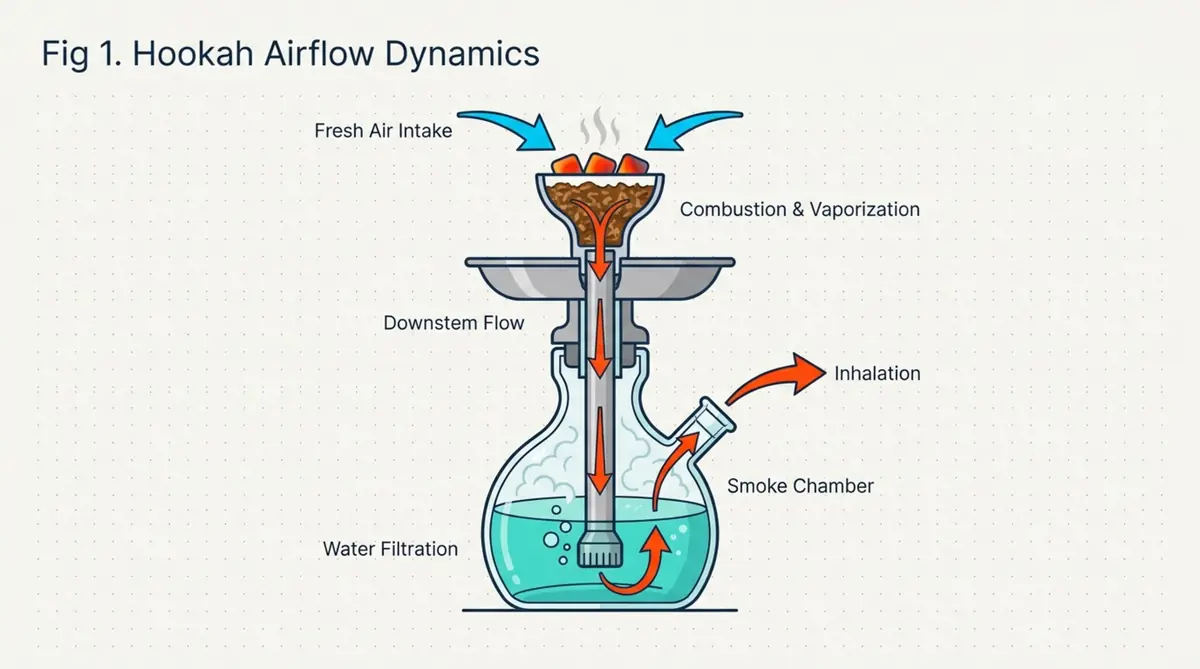
Airflow Path: Smoke’s Journey Through the Setup
When every joint is properly sealed, the hookah operates on a clean airflow circuit:
- Inhaling through the hose lowers the air pressure inside the base chamber.
- This pressure drop draws hot air from the coals down through the shisha molasses in the bowl.
- The heated air vaporizes the glycerin and flavorings, creating rich vapor.
- The vapor travels down through the stem and downstem into the water.
- After bubbling through the water for cooling, the smoke fills the open chamber of the base.
- Finally, the cooled smoke exits through the hose port and hose directly to the mouthpiece.
Placement of Tobacco and Coals
Proper heat transfer depends on how you load your bowl. For most beginner setups, a “fluff pack” works best. Gently sprinkle shisha molasses into the bowl until it sits about 2 to 3 mm below the rim, keeping the leaves loose so air can flow through them naturally.
Once the bowl is packed and covered with foil or an HMD:
- Place 2 to 3 fully lit natural coconut coals around the outer edge of the bowl rather than directly in the center.
- Allow the bowl to warm up for several minutes before starting your session.
Gradual, edge-focused heating helps protect the shisha from scorching and preserves the authentic flavor profile.
Step-By-Step: Assembling a Beginner Hookah Setup
Following a consistent assembly order prevents accidents and guarantees an airtight seal before you light your coals.
Step 1: Prepare and Fill the Base with Water
Place your clean base on a flat, stable surface. Add cold water until the bottom of the downstem will be submerged by 1,5 to 2,5 cm. Avoid overfilling, which can cause water to enter the hose when drawing.
Step 2: Attach the Stem and Downstem
If your downstem is detachable, screw it securely into the bottom of the stem assembly. Insert the stem into the glass base using the base grommet. Press down with a gentle twisting motion until the stem sits level and firmly sealed inside the base opening.
Step 3: Insert the Tray and Set the Bowl Adapter
Slide the charcoal tray over the top of the stem. Thread the bowl adapter onto the stem above the tray, tightening it enough to hold the tray securely in place without overtightening.
Step 4: Connect the Hose and Purge Valve
Insert the hose connector into the hose port using a hose grommet. Check the purge valve on the opposite side to make sure the screw cap is snug and the internal ball bearing moves freely inside its housing.
Step 5: Check Seals and Airflow
Test the setup for air leaks before packing the bowl:
- Place your palm flat over the top opening of the bowl adapter to block the air inlet completely.
- Take a gentle pull through the hose.
You should feel immediate suction resistance with no air hissing into the base. If you can still draw air, re-seat your grommets and check the purge valve until the system is fully airtight.
Step 6: Pack the Bowl and Place the HMD or Foil
Remove the bowl from the hookah to pack it. Sprinkle shisha molasses evenly up to 2-3 mm below the rim. Attach your foil tightly with small holes, or set your heat management device on top. Place the packed bowl firmly onto the top bowl grommet.
Step 7: Light the Coals and Begin Your Session
Heat your natural coconut coals on an electric coil burner until they glow red on all sides with no black spots remaining. Use metal tongs to place 2 to 3 coals on the foil edge or inside the HMD. Let the bowl heat up for 5 minutes, then take a few slow, steady draws to establish the heat flow and start your session.
Build your own hookah in the shisha configurator →Common Hookah Setups: Diagram Variations for Beginners
While the operating principles remain identical, some hookah designs feature slight structural variations.
Single-Hose vs Multi-Hose Setups
A single-hose hookah is the most reliable option for beginners. It features fewer connection points, minimizes the risk of air leaks, and makes heat management straightforward. Multi-hose hookahs are designed for group sessions, featuring multiple ports with check-valve bearings. However, they require careful maintenance to keep every extra port airtight and properly sealed.
Standard vs Modern Hookah Designs
Traditional hookahs often feature classic brass or copper craftsmanship, fixed downstems, and ornate glass vases. They are traditionally paired with clay multi-hole bowls and foil setups.
Modern hookah designs utilize CNC-machined stainless steel, integrated diffusers, magnetic or click-lock base connections, and purpose-built HMD fittings for maximum ease of use and consistent airflow.
Tips for Successful Hookah Setup and Use
Consistent, enjoyable sessions come down to mastering a few fundamental setup habits.
Prevent Leaks and Optimize Airflow
Inspect silicone grommets regularly for cracks, stiffness, or wear, replacing them when they lose flexibility. Always use a gentle push-and-twist motion when inserting stems or hoses. An airtight setup ensures that every bit of inhalation energy pulls heat cleanly through your shisha.
Choose the Right Water Level in the Base
Maintain that 1,5 to 2,5 cm waterline above the downstem diffuser. If you prefer a lighter, more open draw, aim closer to 1 cm of submersion.
Packing Shisha for an Even Smoke
Avoid pressing shisha leaves down tightly into the bowl unless you are working with specific dark-leaf varieties that call for a dense pack. For standard blonde leaf molasses, keeping the pack light and airy allows thermal air to circulate through every leaf, producing thick clouds and steady flavor without burning.
Coal Safety and Ideal Heat Management
Always handle hot charcoal using dedicated metal tongs, and never place coals on unlit surfaces. If the smoke begins to taste harsh or overly strong, use your tongs to move the coals further outward toward the bowl edge or remove one coal entirely. Managing heat proactively keeps the flavor crisp from start to finish.
Final Thoughts
Hookah is a time-honored social ritual with centuries of history centered on hospitality and shared conversation. Learning how each part connects helps you build confidence and master the mechanics behind a great session.
Take time to clean your equipment thoroughly between sessions to keep parts in peak condition and prevent old flavors from carrying over.
With quality hookah accessories, proper water levels, and careful heat management, setting up your hookah becomes second nature, allowing you to relax and enjoy the experience.
Browse complete body and vase sets →Frequently Asked Questions about Hookah Setup Diagrams
What Is the Most Important Connection for Good Smoke?
Every connection point matters equally because hookah functions as a complete vacuum circuit. A leak at the base grommet, hose port, or bowl adapter will dilute your draw with outside air. Maintaining tight seals across all three points is necessary for proper vapor production.
Can I Use a Hookah Setup Without a Heat Management Device?
Yes. Heavy-duty aluminum foil is the traditional method and remains widely used across hookah culture. Wrap the foil tightly over the bowl rim so it forms a drum-like surface, poke small, uniform holes with a poker, and place your coals near the edges to manage heat effectively.
What Are the Differences Between Beginner and Advanced Setups?
Beginner setups prioritize straightforward assembly with single-hose stems, standard clay bowls, and simple grommet connections. Advanced setups often incorporate precision stainless steel engineering, adjustable diffusers, specialty phunnel bowls, and dedicated heat management systems that allow enthusiasts to fine-tune draw resistance and heat transfer for specific shisha blends.
See also.

The best hookah bowls from £300 to £1,300 – Hookah Bowl Review
The number of water pipes available on the market can leave a novice smoker bewildered. Buying the right one to start with is a difficult decision, and our Hookah Selection Guide will make it easier. In this video, in turn, we will focus on a couple of mid-range pipes that we recommend for their longevity, […]
go to article
Hookah vs. Shisha vs. Water Pipe: What Do These Terms Mean?
What is the difference between a hookah, shisha, and a water pipe? While many people use these terms interchangeably, a water pipe is the broad category for the device, a hookah is the specific traditional smoking pipe, and shisha refers to the flavored molasses blend packed inside the bowl. Understanding these distinctions helps you navigate […]
go to article
Why Does a Hookah Bubble? The Airflow Explained
A hookah bubbles because inhaling through the mouthpiece creates low pressure in the vase, pulling fresh air through the hot charcoal and shisha tobacco to create smoke. As this smoke travels down the stem and exits under the water, it breaks into rising bubbles that cool the vapor, leading to a smooth smoking experience. What […]
go to article